All Articles
The Bawl Mill
September 2010 by Staff


Ann Arbor, Michigan, like many cities across the United States, is facing a budget crisis. But the way the city is setting priorities is a prime example of why many politicians are facing a revolt from voters.
In 2007, the city council voted to set aside one percent of funds slated for capital improvement projects to use on pet projects. Now the city plans on using $850,000 of their pet project funds to pay for a water and art sculpture in front of city offices even though the city is several million dollars in debt and city services are being reduced. At least the citizens will have something nice to look at.
• Big government gets even bigger
An analysis of federal employee compensation recently published by USA Today showed that the gap between private and federal pay has more than doubled in the past ten years.
The average federal employee made $123,049 in salary and benefits in 2009, while the average private worker earned total compensation of $61,051. The report stated that total federal employee compensation grew 36.9% since 2000, after adjusting for inflation, while the pay of private workers grew only 8.8% during the same period.
Job creation is good news, but unsustainable job creation at the expense of the taxpayer is just digging a deeper hole. The federal workforce has increased by over 182,000 over the past two years, an increase of approximately 10%, and that number is expected to go up dramatically if ObamaCare survives court challenges and 150 new regulatory agencies and commissions are created as a result of that legislation.
• California leads the way...to financial ruin
California is currently trying to solve a $19 billion budget shortfall, and has become the poster child of how to destroy a vibrant economy.
First, cumbersome regulations and high taxes discourage businesses in virtually every sector of the economy. At least 85 large companies moved all or part of their business out of California in the first six months of 2010, nearly double the amount from 2009, according to Joseph Vranich, a business coach who helps companies move to more regulatory- and tax-environment-friendly states.
“Companies of all types are reducing their California footprint. The list includes well-known California-based firms like Google, Hilton, Genentech, Yelp, Apple, Facebook, and DIRECTTV,” said Vranich. “Meanwhile, lesser-known family-owned companies are leaving the state completely, but they prefer to stay out of the limelight and their moves are difficult to track.”
One of the prime causes of California’s demise is the environmental movement. Environmentalists donated heavily to put favorable politicians in office and were successful in getting AB32 passed and signed by Governor Schwarzenegger in 2006, which essentially requires the state to adhere to the Kyoto Protocol and reduce emissions to 1990 levels by 2020.
It’s no wonder businesses are fleeing the state. Many businesses will be required to invest non-existent profits into new technology to meet California’s environmental requirements scheduled to take effect in 2012 or pay hefty fines. Tack on to that other fees and taxes related to compliance with local, regional and state agencies, environmental studies, turbidity and stormwater requirements. The list goes on and on.
Then there are the unions. The California Teacher’s Association (CTA), public safety workers, and Service Employees International Union (SEIU), with over a million members combined, spend millions in state and local elections to insure the election of politicians who will support pay and benefit increases.
In 1998 , the CTA and SEIU spent a combined $1.8 million to reelect former governor Gray Davis. The payback by Davis sent the state on the path to financial ruin. Davis agreed to pump $1.84 billion into education and lock in higher pay and benefits for teachers, making California teachers the highest paid on average in the country at $67,000, not including benefits.
California is an expensive place to live and teaching is a difficult job. Even though these pay and benefit increases may have been warranted, the state didn’t have the money to fund the increase. The state had counted on unrealistic investment returns of 8% per year that never materialized, and as a result, as of January 2010, the California Teachers Pension Fund had unfunded liabilities of $43 billion.
Public safety workers were rewarded with the right to retire at age 50 at 90% of their highest pay year. Union rules allow those on the verge of retirement to ramp up their retirement pay by working overtime during their final year.
Correctional officers invested $2.5 million in Davis through contributions and advertisements on his behalf, receiving a 34% pay hike over five years in return. Republican Phil Wyman of Tehachapi discovered the power of the correctional officer’s union during a 2004 campaign after he had suggested privatization of some prisons in order to save taxpayer money. The union spent $200,000 in a local election to insure his defeat.
The result of all this—unsupportable wages and pensions for public employees. Over 9,000 retired California government employees are receiving in excess of $100,000 per year. Some former government employees are double-dipping, returning to work for local or state agencies in another job capacity while collecting their original retirement. A recent Stanford University study concluded that the state pension fund is now $500 billion behind in current obligations. Using estimated 2009 population figures, every adult in the state would need to cut a check to the state for $18,158 to meet this one obligation.


Detecting at Old Hydraulic Mines
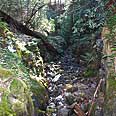 I finally got out recently for my first full, long weekend prospecting trip of the year. Normally I would have been out much sooner, but we had a real late spring in the Sierra Nevada this year with lots of late rain and snow continuing through all...
Weathering, Erosion and Placers
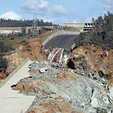 The big interest to prospectors thinking about the effect of erosion is not what might happen long into the future, but what they might find in the rivers later this summer when the water levels go down.
Revisiting the Rocker Box
 The first location we worked was a small, dry ravine cutting through many mineralized zones in an area where some hard rock mining had taken place in the past.
The Bawl Mill
• Cruising into court
• Where did it all go?
• Big Brother is watching...your odometer?
• Apartment cleaning pays well
Melman on Gold & Silver
Whatever else one will be able to say in later months about the year 2002, we can already state that there is no shortage of interesting and important news developments.
Consider Adding Gold to Your Portfolio
One of the biggest surprises on Wall Street during 2003 was the extraordinary performance of gold-oriented mutual funds—investments that normally fall as the stock market rises.
MMAC & PLP Update
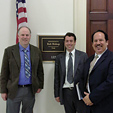 May 2016
PLP had been attempting to raise funds to hire a lobbyist. The excessive cost made it prohibitive, so Clark and Joe packed up their bags and headed off to make this trip themselves.
Subscription Required:
Legislative and Regulatory Update
• Hardrock Mining Accidents Claim Four Lives
• Prospecting Old Tertiary Channels
• The Jenkins Mine Project Pt II: Terrain and Map Study
• Search Called Off for Missing Treasure Hunters
• Glacial Gold in the Midwest
• Hardrock Prospecting in El Dorado County, California
• Gold & Silver of the Comstock Lode
• Melman on Gold & Silver
• Forest Service Pays Miners $245K for Unlawful Destruction of Mine