Both houses of Congress recently passed a spending bill to fund much of the US government through September 2015. There were a few positive items within that bill.
Republicans succeeded in blocking the Environmental Protection Agency (EPA) from changing the definition of “waters of the United States” to include ephemeral streams, washes and irrigation ditches.
The EPA also will have their budget cut by another $60 million, which brings it down to $8.1 billion, a reduction of $2.2 billion since fiscal 2010.
Incoming Senate Majority Leader Mitch McConnell, who’s scheduled to take over the job from Harry Reid, told the Kentucky Farm Bureau, “The bill that funds the Environmental Protection Agency, as you can imagine, is going to be a major target of our efforts, to go after these ridiculous, overreaching efforts that are strangling our economy.”
The bill also bans the Fish & Wildlife Service from adding the sage-grouse to the Endangered Species Act list, though $15 million was approved for the conservation of sage-grouse habitat to the Bureau of Land Management. The sage-grouse is prevalent across ten Western states and an ESA listing would severely restrict public and private land use.
• Judge puts brakes on the EPA in Alaska
A federal judge ordered the EPA to stop work on its effort to preemptively veto the Pebble mine in Alaska.
Documents obtained under the Freedom of Information Act showed that Phillip North, a now-retired EPA biologist based in Alaska, began meeting with opponents of the Pebble project as far back as 2008 about using the power of the Clean Water Act to stop the project before the mining company could apply for a permit.
North and the EPA are accused of conspiring with Native American groups and environmental organizations to come up with a “patently biased” environmental assessment in a lawsuit filed by the Pebble Partnership.
The preliminary injunction issued by Judge Russel Holland indicates he believes the Pebble lawsuit has merit.
Lawmakers investigating the EPA’s role corresponded with North by email and tried to arrange a date for him to appear and provide testimony in 2013, but he disappeared and subsequently hired a lawyer.
• Judge to rule in favor of suction gold dredgers
Judge Gilbert Ochoa made it clear during a December 12 hearing he intends to rule in favor of suction gold dredgers in California regarding preemption.
James Buchal and David Young, attorneys representing the suction gold dredge miners, successfully argued that federal mining law preempts state mining law and their position was backed up by the recent Third Appellate Court decision in People v. Rinehart.
The Mandatory Settlement Conference involving the miners, attorneys representing the State of California and environmental groups will continue and there are still hoops to jump through before suction gold dredging can resume.
For the complete story, see “Significant Progress for California Suction Gold Dredgers” later in this issue.
April 2016 The legislators soon came to the realization that Mining Districts and our proposed bill can solve many of the problems they currently face in their home states.
September 2015 Retired geologist Dave Taylor of Farmington, New Mexico, predicted the disaster in a letter published by the Silverton Standard a week before it occurred.
October 2012 • It's almost November
• Two federal land managers found guilty of contempt
• A chance to halt additional wilderness in Southern California
• Oregon mineral withdrawal
• A really good reason to get out and vote in Oregon
January 2013 Thomas Tierney has been a long-time subscriber to ICMJ’s Prospecting and Mining Journal and has read about the many battles between miners and overzealous regulators. Then he faced his own battle.



 The legislators soon came to the realization that Mining Districts and our proposed bill can solve many of the problems they currently face in their home states.
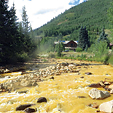 Retired geologist Dave Taylor of Farmington, New Mexico, predicted the disaster in a letter published by the Silverton Standard a week before it occurred.