All Articles
Legislative and Regulatory Update
July 2009 by Scott Harn


• Roadless Rule back in play
The Obama Administration has issued an order calling for a one-year moratorium on most road building, logging and other development in National Forests that were part of the Clinton-era Roadless Rule in 2001.
Approximately 58 million acres are affected by the directive issued by Agriculture Secretary Tom Vilsack on May 28, which gives him sole authority over all proposed construction projects and management decisions in designated roadless areas in every state except Idaho. Idaho has implemented its own plan to manage these areas.
The original Roadless Rule was contested and resulted in two opposite decisions from two separate federal courts; one struck down the rule while the other upheld it. Both decisions have been appealed.
• Action needed on SB 670
It may not be too late to fire off a letter to Governor Schwarzenegger of California, regarding SB 670.
The bill would stop all suction dredging in California until a new Environment Impact Report is completed. See page 5 in this issue for more information.
• Abbey recommended to head BLM
Bob Abbey, formerly the top Interior Department official in Nevada, has been nominated to be the director of the Bureau of Land Management by President Obama.
Abbey retired in 2005 as BLM’s Nevada director after over 30 years of government service.
• Capped and jobless
Organizations are crunching numbers to determine the number of American jobs that will be lost if the Waxman-Markey cap-and-trade bill passes in Congress.
The Heritage Foundation estimates that 987,440 jobs would be lost during the first eight years of cap-and-trade regulations, rising to 2.5 million jobs lost in America over the first 25 years due to the added costs associated with cap-and-trade compliance.
• S 787
The Clean Water Restoration Act is a bill that would take jurisdiction over waterways away from individual states and give that authority to the federal government. It would also remove the requirement that a waterway be navigable to be subject to government regulation. All bodies of water—including groundwater, ditches, pipes, streets, gutters and desert washes—would be regulated under the Clean Water Act.
The Senate Environment and Public Works committee was due to vote on the bill on June 18.
• SB 796 & HR 699
The Hardrock Mining and Reclamation Act, and its companion bill in the House, HR 699, remains in committee while Congress addresses cap-and-trade, health care, and other issues.
Both bills would place additional burdens on mining in the United States with additional regulations, financial guarantees and royalties.
_______________
There are so many environmental restrictions and regulations being proposed in Congress that it’s difficult to keep track of them.
It is going to be a tough road over the next several years. Democrats are in control of Congress and the White House, and environmental groups are taking full advantage of the opportunity to push through legislation that severely restricts public and private land use in America. 

12-Year-Old Unearths Large Diamond
It is the eighth largest brown diamond to be found and certified by park staff.
Prospecting for Hardrock Gold - Part II
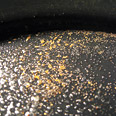 I finally managed to return to this exploration effort. There was still snow on the ground on the north side of the mountain where I started, but I knew the south side was likely melted and gold fever bit too hard to stay inside any longer.
Montana Approves Stillwater Expansion Bonds
The Montana Board of Investments unanimously approved a motion to issue up to $35 million in bonds to help Stillwater Mining Corp. expand its platinum and palladium mine.
That First Nugget
 After getting all the gear together we headed up the old road that led us to an old ground sluice site. George and Kaleb were using lightweight VLF (very low frequency) detectors. I carried a newer technology unit that is just a tad coil-heavy in the front.
Legislative and Regulatory Update
• Salmon populations and the ESA
• Miners need to get involved in Utah
Multiple Use Lands, Symbiotic Relations and Conflict Resolution
The automatic discrimination and exclusion of man from nature, like his access and use of the land, presupposes man as a destructive force for change, absent a relative hard look at the natural forces of change. Setting aside lands for non-use does not encourage wise use symbiotic tenets, which man has traditionally formed in his coexistence with nature.
The Power of Mining Districts
...Most importantly, the mining districts can open the federal land to multiple-use by the public on principles of inclusion rather than the present-day exclusions...
Subscription Required:
The Bawl Mill
• The Suction Gold Dredging Fight Continues in California
• Gold in the South Pass Greenstone Belt, Wyoming
• Chinese Buy Out Australian Miners
• Using a Winch to Work Smarter, Not Harder
• The Forgotten Specimen—Part II
• Germany Developing Gold Vending Machine
• How to Complete Assessment Work and Claim Maintenance
• More Tennessee Gold
• Mining Stock Quotes and Mineral & Metal Prices
Free:
Melman on Gold & Silver