Prospecting & Detecting
Prospecting Underground: Use Caution
April 2011 by Don Robinson
In underground placer work, the contact point of the bedrock tunnel and the gravel is a very weak point and always has to be timbered. The bedrock here is thin, fractured, and the gravels loose from many years of oxidizing.Searchers' Dreams
The story began in a southern Arizona mountain range...
Summertime Gold Panning
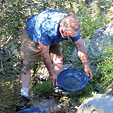 I have smaller pans for cleaning black sand concentrates, big pans for taking large samples, pans with corners for pouring out materials, and pans with lots of special riffles. This variation is why I have so many pans—they each have their specialty.
Proper Placer Sample Processing
...your sampling procedures should not be designed to catch gold your mining technique will never recover.
Tips for Effective Drywashing
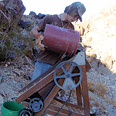 Back in October I read with great interest Chris Ralph’s article on the use of a metal detector while drywashing, and I wholeheartedly agree—I wouldn’t even consider going drywashing without using a metal detector in conjunction...
Ask the Experts
Breaking cemented gravels
The Hunt for Remote Canyon Gold
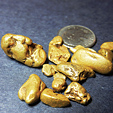 A large, 8-pennyweight piece popped out of a very small crevice where the water had been extremely swift in the winter, leaving no visible gravel.
Critical Minerals: Titanium—Part II
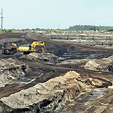 There are both hard rock and beach sand types of titanium deposits, but the hard rock deposits need to be at least 10 percent titanium while the beach sands often are economic with only two or three percent titanium.
Subscription Required:
The Bawl Mill
• Mining Claims—What to Know Before You File
• Small-Scale Concentrating and Recovery Methods
• 5th Circuit Ruling May Benefit Miners
• Indicator Minerals for Gold & Silver
• Mud Men: Pocket Miners of Southwest Oregon Part III
• Legislative and Regulatory Update
• Melman on Gold & Silver
• Mining Stock Quotes and Mineral & Metal Prices
• Silver Mining Returning to Texas
Free:
A New Look at Old Mines
• Proposed Regulations for California Suction Dredging