All Articles
Legislative and Regulatory Update
September 2006 by Scott Harn


• Roadless Rule
The Bush administration had the right to overturn a ban on road construction in portions of national forests, but may have needed to weigh possible environmental effects at the same time, a federal judge said.
US District Judge Elizabeth Laporte said the Forest Service appeared to be “on solid ground” last year when it reversed Clinton’s Roadless Rule.
But she questioned whether the agency violated federal law by skipping environmental studies—the heart of two lawsuits brought by 20 environmental groups and the states of California, Oregon, New Mexico and Washington. The cases have since been consolidated.
Laporte said she did not know when she would issue a final decision.
The legal dispute stems from the Clinton-era rule that prohibited logging, mining and other development on 58.5 million acres of forestland in 38 states and Puerto Rico.
Timber companies dependent on national forest land and some western states challenged the Clinton rule, and the Bush administration, in May 2005, replaced it with a voluntary state-by-state petition process.
• Eastern Oregon miners forced out of water
A federal judge has ordered that gold mining operations along the North Fork of the Burnt River in Baker County, Oregon, be suspended.
Environmentalists had filed a lawsuit against the Wallowa-Whitman National Forest, claiming that allowing mining in this area violated the Clean Water Act.
Judge Papak agreed. “The Forest Service may not ignore or defer its responsibility to remedy existing water pollution in the project area based on a misguided notion that the right to mine trumps federal and state environmental laws,” wrote Judge Papak.
Key to the lawsuit were claims that the North Fork of the Burnt River and two of its tributaries do not meet federal water quality standards for temperature and clarity.
A total of 49 known mining operations are affected by the ruling.
• Colorado city pushes for more regulations
Environmentalists in Grand Junction, Colorado, have gathered enough signatures for a ballot measure in that city that could create additional regulations for public land users. The sponsors hope to limit the areas open to exploration, and create their own water quality and monitoring standards.
The Grand Junction City Council will decide either to pass its own version of the proposal or place it on the November ballot.
Some local residents were upset that federal oil and gas leases were sold in areas that supply drinking water to the city. The Bureau of Land Management had already agreed to suspend development of leases for one year to address residents’ concerns.
The ballot proposal would apply to logging, mining, oil and gas development, and cattle operations.
• Kensington project moves forward
US District Judge James Singleton dismissed a lawsuit challenging the federal government’s approval of the Kensington Mine’s plan to dispose of waste rock into Alaska’s Lower Slate Lake.
The Southeast Alaska Conservation Council and the Sierra Club are expected to appeal to the 9th Circuit.
Construction continues on the Kensington Mine, operated by Coeur Alaska, a subsidiary of Coeur d’Alene Mines of Idaho. The company hopes to open the mine in 2007, and currently employs about 300 workers. 

Iron Minerals, Your Detector and Gold
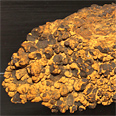 It’s worthwhile for the prospector using a metal detector to know a little bit more about the association of iron and gold as well as how iron minerals affect your metal detector.
Managers at Fault for Two Deaths at Meikle Mine
Two miners were killed in an accident partly because someone wedged a broom handle against a reset button to bypass an alarm that would have shut down the system, federal safety investigators said.
Palladium Hitting Jewelry Market
When Frank McAllister talks about palladium, his passion is palpable. So when the Stillwater Mining Co. CEO compares the precious metal to a fairy-tale princess, one can’t help but wait for the explanation.
Silver Bonanza in the Sierra Madre: The Glorious Past of Batopilas—Conclusion
The first Madero Revolution broke out in Mexico on November 20, 1910. On December 27, a revolutionary party exacted supplies, arms, and mules from the company until January 7, 1911, when the 7th Cavalry Regiment of the federal government destroyed three and a half tons of their dynamite near Baquiachi. On September 8, 1912, Batopilas was captured, a local garrison driven out, and the company forced to pay 10,000 pesos. Federal forces retook the town September 19.
The Bawl Mill
• Getting scolded during recess happens to adults, too.
• On-the-job training
• Batteries not included
• By the numbers
Mining Companies Use Conservative Valuations
Gold mining companies are being conservative in asset valuations despite recent spikes in gold prices in terms of US dollars, according to a survey by PricewaterhouseCoopers.
Looking Back
Excerpts from California Mining Journal, our original title, published 50 years ago this month.
Subscription Required:
The Bawl Mill
• The Yukon-Klondike Goldfields—Part I
• New Mine from Century-Old Gold-Silver Bonanza
• Solar Powered Placer Equipment
• The Treasure Detective—Part III
• Countries Want More Concessions From Miners
• New Interim Rules For Washington Miners
• Detecting for Possible Mid-Range Eluvial Gold
• Melman on Gold & Silver
Free: