All Articles
How to Properly Ground Balance to Find the Most Gold
August 2010 by Chris Ralph
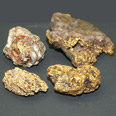 Many new detector operators and even some experienced ones don’t pay enough attention to keeping their detectors in proper balance. The result is false targets as well as incessant chirping and chatter.
Additional articles that might interest you...
The Bawl Mill
October 2002
• No end in sight to tax and spend
• Leadership or sinking ship?
• No end in sight to tax and spend
• Leadership or sinking ship?
Platinum Firm, Palladium to Remain Weak
July 2003
Platinum and palladium demand and prices continued to move in opposite directions in 2002, according to Johnson Matthey (JM) in Platinum 2003.
Platinum and palladium demand and prices continued to move in opposite directions in 2002, according to Johnson Matthey (JM) in Platinum 2003.
Finding Paystreak Gold With A Metal Detector
October 2008
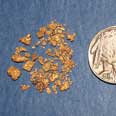 There is no question metal detectors can be used to find paystreaks, but the method I am going to describe may not be exactly the procedure some prospectors would expect.
There is no question metal detectors can be used to find paystreaks, but the method I am going to describe may not be exactly the procedure some prospectors would expect.
In Pursuit of Gold & Silver in the Sierra Madres—The Tejeda Mines
April 2007
 One of our claims, “concessions” in Spanish, lies atop a mountain approximately 15 miles Southwest of our Pueblo. It is reached by a dirt track that starts in Arivechi. We leave the Pueblo and drive up...
One of our claims, “concessions” in Spanish, lies atop a mountain approximately 15 miles Southwest of our Pueblo. It is reached by a dirt track that starts in Arivechi. We leave the Pueblo and drive up...
Looking Back
July 2004
Excerpts from California Mining Journal, our original title, published 50 years ago this month.
Excerpts from California Mining Journal, our original title, published 50 years ago this month.
Bawl Mill
August 2014
• Lukewarm consensus among scientists regarding global warming
• Yet another example of why big government is NOT the answer...
• Everyone deserves a second chance...
• Lukewarm consensus among scientists regarding global warming
• Yet another example of why big government is NOT the answer...
• Everyone deserves a second chance...
Subscription Required:
The Bawl Mill
• Legislative and Regulatory Update
• Commercial Placer Mining With Jigs
• Ask The Experts: Bench Top Crushers
• Ask The Experts: How to remove precious metals from lead?
• Authorities Search for Lost Treasure Hunters
• Alaska Geologist Survives Grizzly Attack
• The Guaniamo Diamond Area, Venezuela—Part II
• How California Became the Golden State
• The Rocky Bar Mining District, Idaho
• Mining Stock Quotes, Mineral & Metal Prices
Free:
The Jenkins Mine Project—The Golden Rules of Science
• Melman on Gold & Silver
• ICMJ Again Matches Funds For PLP Donations