History & Geology
Yesterday's Gold—Today's Mine
December 2011 by Craig E. Redick
It would seem that we are often indeed destined to repeat history. In terms of gold discovery, even with all the advancements that have been made over the years, it seems we are once again on the cusp of returning to the 1800s world of gold mining. Even as you read this, a new gold rush is taking place in a sleepy little town in South Carolina.The Oquirrh Mountains, Utah
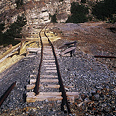 ...we will visit three dormant mining districts that lie in the Oquirrh Range in Utah. Some major activity that transformed the lives of thousands of people occurred here from the mid 1860s to the late 1990s.
Rare Silver Nuggets And Their Origins
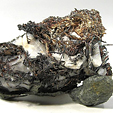 Silver nuggets have been described as “ultra-rare,” “prized” and “unique.” Naturally occurring silver nuggets are rare enough to suggest caution when purchasing. Fakes have reportedly been produced and misrepresented for sale as genuine specimens.
A New Look at Old Mines
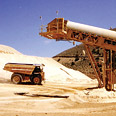 Exploration companies are actively looking for properties with profitable potential, even if the ground was once cast off as too low in grade to be economically viable. This is especially true in states that are reasonably friendly toward...
Alaska: Kodiak Islands Mineral Resources
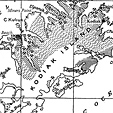 The fresh material is worked and concentrated by the waves on the flat, wide beach platform. The waves wash away the lighter minerals, leaving the heavies near the bluffs and in depressions on the beach.
The Silver, Gold and Gemstones of Candelaria, Nevada
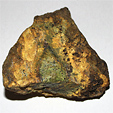 The Candelaria area is of interest to prospectors not just for silver, gold and other metals, but also for the beautiful gemstones found there.
The Golden Streams of Butte County, California
Even though these were some of the earliest placer deposits to be worked, there is still plenty of gold left today—it just takes more work to recover. Knowing about the old locations where gold has been found is the first step to success.
The Seven Troughs Mining District
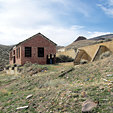 The favorable geology of the northeastern and central parts of the Seven Troughs Range are the parts most interesting to prospectors. They are underlain by a thick sequence of Tertiary volcanic rocks, mostly rhyolites and andesites.
Subscription Required:
The Bawl Mill
• Our Readers Say
• Ask the Experts—Looking up mining claims on the Internet
• Ask the Experts—Access to mining claim across private land
• Ask the Experts—Best way to identify calaverite and sylvanite
• Legislative and Regulatory Update
• WSGS Releases New Geologic Maps
• Prospecting on the North Yuba
• Where to Find Gold in Indiana
• Prospecting Australia—Part III Anatomy of a Nugget Patch in Western Australia
• Nevada Miners: Check Your Claim Markers
• Managers at Fault for Two Deaths at Meikle Mine
• Cold Water Gold
• River Dredging vs. Creek Dredging—Part I
• Melman on Gold & Silver
• Mining Stock Quotes and Mineral & Metal Prices
Free:
Ask the Experts—How do you determine how far a piece of gold has traveled in a stream?
• Testing Ores for Free Gold