All Articles
The Plumas Eureka District
October 2006 by Chris Ralph
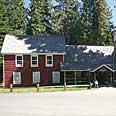 During any great gold rush, tales of fantastic finds abound—some are real and some are not. In the mother lode country of California, in the fall of 1850, there were a lot of fantastic finds and probably the wildest tale of that time was the story of a lake surrounded...
Additional articles that might interest you...
The Bawl Mill
March 2003
• War games...
• #%$@*!
• Big hermano is watching...
• War games...
• #%$@*!
• Big hermano is watching...
Great Basin Gold
June 2001
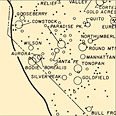 The Great Basin, first named by Capt. John Fremont in 1843, consists of a vast region of internal drainage, occupying most of Nevada and western Utah, and parts of California, Oregon, and Idaho.
The Great Basin, first named by Capt. John Fremont in 1843, consists of a vast region of internal drainage, occupying most of Nevada and western Utah, and parts of California, Oregon, and Idaho.
MMAC & PLP Update
July 2016
 …what I’d like to focus on in this update is the assistance they provided to a suction gold dredger in Idaho being harassed by an environmental group.
…what I’d like to focus on in this update is the assistance they provided to a suction gold dredger in Idaho being harassed by an environmental group.
Detectors: Past, Present and Future
June 2016
 Detectors were invented long before I was born, but it was in the 1960s when they started to become an item popular enough to power a fledgling industry. The key development was miniature transistor technology replacing the old fashioned tube technology of the 1950s, making lightweight, affordable detectors possible.
Detectors were invented long before I was born, but it was in the 1960s when they started to become an item popular enough to power a fledgling industry. The key development was miniature transistor technology replacing the old fashioned tube technology of the 1950s, making lightweight, affordable detectors possible.
From The Editor
April 2009
We (finally) have the new version of our website up and running, and it seems to be a hit!
We (finally) have the new version of our website up and running, and it seems to be a hit!
Miners Attend Meeting in Myrtle Point, Oregon
July 2000
It was "standing room only" as a crowd of approximately 50 interested miners attended a meeting hosted by the Powers Ranger District and Forest Service personnel from the Siskiyou National Forest.
It was "standing room only" as a crowd of approximately 50 interested miners attended a meeting hosted by the Powers Ranger District and Forest Service personnel from the Siskiyou National Forest.
Subscription Required:
The Bawl Mill
• California State Gold Panning Championships
• Mergers Continue at Record Pace
• The Yukon-Klonkide Goldfields—Part II
• Foreign Investment Hits More Roadblocks
• The Treasure Detective—Part IV The Story of Goldstone Nuggets
• Another Uranium Boom in the West
• Court: Kennecott Eagle Minerals Application Complete
• Remote Mining Camps of Yuma County
• The Robin Redbreast Lode
• Final Buckhorn Mountain Study Released
• Melman on Gold & Silver