All Articles
Legislative and Regulatory Update
May 2008 by Scott Harn


The US Forest Service is trying yet another time to shut down small-scale mining in National Forests.
On March 25, the USFS proposed changes to regulations governing locatable minerals in National Forests (36 CFR Parts 223, 228, 261, 292, 293) by publishing proposed rules in the Federal Register.
Their intent is clearly to kick prospectors out of National Forests.
The Forest Service wants to create a Bonded Notice category. Included in this category would be prospectors operating dredges, highbankers and similar motorized equipment.
Sleeping in a tent while prospecting would be classified as "occupancy," which would also require a bonded notice. There is no similar rule proposal for other user groups.
Using a motorized vehicle to access the forests would also trigger the requirement for a Bonded Notice if the prospector wants to access any areas that are off of routes approved for use and regularly maintained by the agency. This requirement would also apply to those prospectors who want access to patented property.
They obviously are aware that there are currently no companies bonding small miners. Those wishing to post a bond would need to provide cash or approved government securities.
We don’t have enough space here to adequately cover the proposed rules in the 23-page document. The entire document is available for your review on our website. Click on Pending Rules & Regulations under the Resources tab.
Comments are due by May 27, 2008.
Send written comments to:
Forest Service, USDA
Attn: Director, Mineral and Geology Management (MGM) Staff, (2810)
Mail Stop 1126
Washington, DC 20250-1125
Fax comments to: (703) 605-1575
Email comments to:
36cfr228a@fs.fed.us
For more information, contact Mike Doran, Minerals and Geology Management Staff, (208) 373-4132.
We have been in contact with Jerry Hobbs, president of Public Lands for the People. There are many sections of the proposed rules that conflict with existing laws, specifically the 1872 Mining Law. Another lawsuit against the Forest Service will likely be necessary and PLP is willing to take the lead role if they receive sufficient financial support.
For those of you who aren’t familiar with PLP, they are a non-profit organization dedicated to protecting your rights and they welcome tax-deductible contributions. Contributions are accepted through their website at www.plp2.org.
• Bills would set more lands off-limits
The House of Representatives approved HR 2016 on April 9, which would create a 26 million-acre National Landscape Conservation System (NLCS) managed by the Bureau of Land Management (BLM). The Senate is working on a counterpart bill, S 1139.
The American Land Rights Association states the legislation would create Park Service restrictions on BLM lands.
The Wilderness Society sent out an alert to their membership, encouraging them to support this legislation because the restrictions on these lands would create "…our newest legacy to future generations."
Senator Diane Feinstein (D-California) has been preparing an amendment to expand the proposed NLCS to 32 million acres by adding the entire California Desert Conservation Area (CDCA). Approximately 4 million CDCA acres are already included in the bill, but Feinstein would add another 6 million acres.
The Senate is also considering S 2739. This bill consolidated more than 60 individual bills that would create additional wilderness areas, like the 106,000-acre Wild Sky region in the Mt. Baker-Snoqualmie National Forest.
Please contact your congressional representatives and let them know your position on these bills.


Iron Ores and Iron Mining
For more than 40 years, iron ore prices have been decided by private negotiations conducted between the largest of the iron miners and the largest steel producers. These two sides dominate both the spot and contract iron ore markets.
Melman on Gold & Silver
The past month was a good one for for George W. Bush. First, he was officially inaugurated for his second term in office and made a well-received speech advocating the American position on world peace. Then Iraq held an election that was extraordinarily successful in comparison to the woeful predictions that had been made.
Resurrecting An Old Hard Rock Mine—Safety Is No Accident
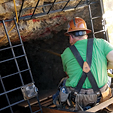 Now it was time for the nerve-wracking part of the job: actually removing anything from the hanging wall we deemed to be in need of removal because it was either loose, could be loose, looked loose, or we felt it was just downright dangerous
Choosing The Right Detector Coil
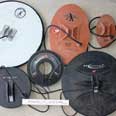 Every machine has its own adjustments and settings, but one of the most important ways to increase the capabilities of whatever detector you own is through the use of accessory coils.
Large Gold Deposit Types
 It is not necessary to have a PhD in geology, but you need to know the basics, so that’s what I am going to try to dig into here—the understandable basics of these gigantic gold deposits.
Old Mine Sites and New Technology
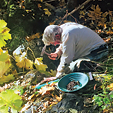 We’ve had two trips to the deserts of Nevada and explored mines and mill sites, hiked miles of ravines in California, and swung our detector coils over thousands of square yards of bedrock.
Gold in the Chinle Formation
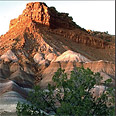 The Chinle Formation, of Triassic age, underlies about 100,000 square miles in Arizona, Colorado, Nevada, New Mexico, and Utah. It adds to the scenic grandeur of the great Colorado Plateau province, noted for its high cliffs and deep canyons.
Subscription Required:
The Bawl Mill
• Ask the Experts—Why doesn't the 1872 Mining Law apply to all 50 states?
• Ask The Experts—Where do I find information about getting paid for raw gold?
• Understanding Geologic Deposit Models
• The Lost Silver Triangle of the Sierra Madre—Part II
• Prospecting for Diamonds
• Avino’s Durango Project
• Success With A Detector
• Horsetail Gold
• The Makorakoza of Zimbabwe—Centuries of Prospecting in Gold-Hosting Dolerites
• Melman on Gold & Silver
• Mining Stock Quotes and Mineral & Metal Prices
Free: