All Articles
How PGMs Affect Assay Beads
September 2001 by Charles L. Butler
Most fire assayers are trained to observe the cupelled beads very carefully, noting any discoloring or surface roughness that might indicate that one or more of the platinum group metals (PGMs) are present. The “clues and tests” I have included in this article stem from several sources, including my 35 years of experience performing torch assays...California Miners Locate Rich Pocket of Specimen Gold
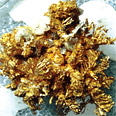 Over fifty pieces of dendritic gold, ranging from 1 gram up to 2.5 ounces, were recently discovered at a mine in the Allegheny Mining District in Northern California.
Legislative and Regulatory Update
• SREP appeals
• No decision yet in Karuk case
• Right to Access bill
Legislative and Regulatory Update
• National Strategic and Critical Minerals Production Act
• CA suction dredging update
• Appropriations Bill addresses problems at EPA
• Bad science, worse policy
Gold of the Iditarod Mining District, Alaska
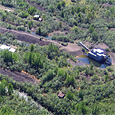 It was the middle of winter and the valley was covered in snow, making prospecting a matter of sinking shafts in the ground.
Picks & Pans: Basic Dry Washing Operations in Gold Placer Mining
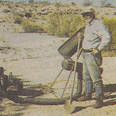 Some of the advantages of dry washing operations are low overhead costs (inexpensive methods and equipment), and the fact that many mining operations can be conducted by one or two individuals.
Placer PGMs in Alaska
The state of Alaska is huge, over twice the size of Texas, with most of the population in just a few towns. The northern third of the state is north of the Arctic Circle, and vast regions are only sparsely populated.
The Geology of Diamond Deposits
 New theories have been developed and they may lead to new discoveries and give prospectors some new insight on where to look for diamonds.
Subscription Required:
The Bawl Mill
• A True Endangered Species
• Guest Editorial—Vertical Disintegration
• USGS Reports Increase of Imported Minerals
• The San Juan Mountains, Colorado
• A Silver Opportunity
• Gold in Virginia
• Picks & Pans: DEF Prospectors Rally Was a Huge Success
• News From GATA
• Our Nugget Shooting Adventure
• Fly Fishing the Mine Tailings/Headwaters of the Clark Fork, Montana
• Company Notes
• Melman on Gold & Silver
• Mining Stock Quotes and Mineral & Metal Prices