All Articles
Picks & Pans: Dredging at Douglas Creek, Wyoming
March 2003 by Leonard Leeper
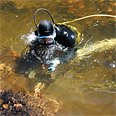 Labor Day! The last chance of the year to do some dredging in Wyoming. Wyoming’s dredging season runs from June through the Labor Day weekend.
Additional articles that might interest you...
Prospecting Homonyms
April 2012
 Three homonyms come to mind when I think of gemstones, gold and vegetables: carrot, carat and karat. Let’s look at carrot first.
Three homonyms come to mind when I think of gemstones, gold and vegetables: carrot, carat and karat. Let’s look at carrot first.
Basic Geology for the Independent Miner—Part I Recognizing and Understanding Minerals
January 2006
 Many individual prospectors would like to know a little more about the geology of gold deposits. There is no doubt that in the final analysis, no matter how well you operate your equipment, unless you can find the places where gold is...
Many individual prospectors would like to know a little more about the geology of gold deposits. There is no doubt that in the final analysis, no matter how well you operate your equipment, unless you can find the places where gold is...
Dredging Below the Homestake
April 2005
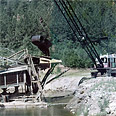 What better place to dredge for gold in the early 1970s than downhill from the largest gold mine in the US? Gold prices were rising, and it was a good time and place to shop for a prospect.
What better place to dredge for gold in the early 1970s than downhill from the largest gold mine in the US? Gold prices were rising, and it was a good time and place to shop for a prospect.
The Fire Assay of Fly Eyes
July 2002
Colorado-Utah-Wyoming oil shale was first reliably discovered to contain gold and silver by the U.S. Bureau of Mines in the 1920s. Although most of this vast shale resource, up to 1,000 feet in thickness, contained nil or barely detectable values, many brown shale samples fire assayed here over the past thirty years have yielded up to 0.02 ounces per ton (opt) Au and 2.0 opt Ag.
Colorado-Utah-Wyoming oil shale was first reliably discovered to contain gold and silver by the U.S. Bureau of Mines in the 1920s. Although most of this vast shale resource, up to 1,000 feet in thickness, contained nil or barely detectable values, many brown shale samples fire assayed here over the past thirty years have yielded up to 0.02 ounces per ton (opt) Au and 2.0 opt Ag.
Ask The Experts—Difference between a Geiger counter and scintillator
October 2011
Would you explain the difference between a Geiger counter and a scintillator and how they operate in uranium prospecting?
Would you explain the difference between a Geiger counter and a scintillator and how they operate in uranium prospecting?
Ask The Experts
May 2016
• Any suggestions about gold panning in Oregon?
The National Mining Hall of Fame to Induct Four
July 2008
Ceremonies for the induction of four mining industry pioneers into the National Mining Hall of Fame will be held Saturday, September 13, 2008, at the Charles F. Barber Pavilion of the Museum Convention Center in Leadville, Colorado.
Ceremonies for the induction of four mining industry pioneers into the National Mining Hall of Fame will be held Saturday, September 13, 2008, at the Charles F. Barber Pavilion of the Museum Convention Center in Leadville, Colorado.
Subscription Required:
The Bawl Mill
• The Steeple Rock District, New Mexico
• The Hunt for Diamonds, Nunavut, Canada
• Famous Yuba River Dredge Sinks
• Gold in Maine?
• Mud Creek Placer Mine Adventure
• Junior Miners and Investors Gather in Canada
• Gold in Gossan
• Company Notes
• Gold Prospecting on the East Fork River, Alaska (Part III—Conclusion)
• National Mining Hall of Fall and Museum Calls for Poetry
• Mining Stock Quotes and Mineral & Metal Prices
• Melman on Gold & Silver
• Looking Back