All Articles
The Chinese Experience
January 1999 by Richard H. Peterson, PhD
The Weaverville War at the California MinesAdditional articles that might interest you...
Rare Coin Makes a Mint at Auction
September 2000
Imagine a coin worth more than its weight in gold...
Imagine a coin worth more than its weight in gold...
Basic Geology for the Independent Miner—Part VI Geology of Placer Gold Deposits
June 2006
 Placer deposits are the focus of many small-scale prospectors, as they can be worked with comparatively inexpensive equipment. In this conclusion of a six-part series, we will take a look at the geology and formation of placer deposits...
Placer deposits are the focus of many small-scale prospectors, as they can be worked with comparatively inexpensive equipment. In this conclusion of a six-part series, we will take a look at the geology and formation of placer deposits...
Ask The Experts
November 2015
• When geologists and old-timers have conflicting views.
• When geologists and old-timers have conflicting views.
The Amazing Mineral Tourmaline
December 2013
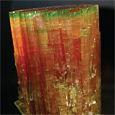 It is a gemstone, and yet it is also closely associated with many types of metal ores. It's valuable itself but often points toward other valuable minerals—that is certainly something prospectors want to know more about!
It is a gemstone, and yet it is also closely associated with many types of metal ores. It's valuable itself but often points toward other valuable minerals—that is certainly something prospectors want to know more about!
Company Notes
December 2003
• Coeur d'Alene Mines Corp.
• Northern Dynasty Minerals Ltd.
• Kimberly Gold Mines, Inc.
• SpectrumGold Inc.
• Coeur d'Alene Mines Corp.
• Northern Dynasty Minerals Ltd.
• Kimberly Gold Mines, Inc.
• SpectrumGold Inc.
Gondwana Gold and Diamonds
October 2002
Some 250 million years ago, the Earth had just one supercontinent, known as “Pangaea.” For whatever reason, the supercontinent began to break apart. South America and Africa remained joined, as “Gondwana,” until 65 million years ago, when they split apart. The obvious “fit” of South America with Africa was noted by geologists back in the 19th century, but it was not until Alfred Wegener came out with his “continental drift” hypothesis in 1912 that people took note.
Some 250 million years ago, the Earth had just one supercontinent, known as “Pangaea.” For whatever reason, the supercontinent began to break apart. South America and Africa remained joined, as “Gondwana,” until 65 million years ago, when they split apart. The obvious “fit” of South America with Africa was noted by geologists back in the 19th century, but it was not until Alfred Wegener came out with his “continental drift” hypothesis in 1912 that people took note.
Subscription Required:
Free: